Sunday, June 7, 2015

World Cup and Its connections to Culture


     The World Cup is one of the best ways to look into another culture and unite with other people. It is a very unique tournament, that gives a glimpse into other cultures. Not only does it open the host country up to the rest of the world, it also gives you a very small window into other countries and regions. The way a team plays can be a good way to see how a culture works, and what some of the issues are for those places.
    The Latin Post has a really good article on why the World Cup can bring people together by, Edwin Molina. “The World Cup has a way of bringing people together, bonded by a common goal of goals, family, friendships, and patriotism that is unique to the international soccer tournament. It is not like the Olympics, where people pretend to know curling or gymnastics, never being engaged in the sports except on that given week.” Says Edwin. The World Cup and Football/Soccer is a common language amongst people all over the world. It has its own form of communication that everyone know and understands.
The Conversation has a pretty good article on the cultural and political issues and solutions that come from the World Cup. “Cultural and political legacies of the World Cup: where to now?” by Ramon Spaaij and Jorge Knijnik looks into the World Cup hosted by Brazil. The first part of the article is about public opinion about the World Cup and its political ramifications. Despite the protest before the tournament started it never amounted to anything. Once it started the country sat back and watched the rest of the world drool over the beautiful game with them. Even their countries humiliating outing in the World Cup, which came with much sadness and heartbreak didn’t change their opinions on the World Cup. What people thought was going to be a mess turned out to be well organized and planned out, “Overall, however, the World Cup’s organization was successful by any measure. Some European commentators and academics have even said that the event was better organized than the 2012 London Olympics.” They say. As for their upcoming election which many thought the current president would lose were wrong. She got reelected.
        Another resource I gathered was, “Brazil's Dance with the Devil: The World Cup, the Olympics, and the Fight for Democracy” by Dave Zirin is a good look into the balancing act of hosting these events. In one of the opening pages it has a quote from former Brazil captain Socrates, “Victory is secondary. What matters is joy.” I love this cause during Brazil’s outing I think the people looked back on what had already happened and it was nothing but joy. But there are some things that to some hurt. For instance the Maracana, Brazil’s premier stadium. It once held 150,000 people and once got 200,000 people crammed inside it for a game. But over time the Brazilian government and owners of the club started to cut the stadiums size down. It now resides at 75,000. What once was home to all walks of life was cut to only those who could afford tickets. The once practically free nosebleed seats were gone. And for many this is a symbolic way of capitalism destroying the game they love.
  The World Cup is expanding its boundaries. What was once a tournament that was only hosted by Europe and South America and the every once in a while dip into North America, is now going to places like South Africa, and South Korea. Places that may not be soccer super powers, but is a sign of the games growth and accepting nature. Recent events have unfolded(ones in my opinion are nothing but good for the game and World Cup) with the bidding process of the 2018, and 2022 World Cups. More on the 2022 World Cup later. But in general it was an issue everyone knew, and at the end of the day needed to happen. I think the World Cup will become more popular as time goes on and with the upcoming Women’s World Cup in Canada going right now the game is going into new frontiers and breaking down barriers. The 1998 France team is one of those feel good stories. These four videos go ahead and show how powerful the World Cup can be to inspire a nation and too bring two cultures together, how a tragedy can turn into a national symbol of hope for the future, and how the game and a holiday made enemies friends.


     The World Cup is also very interesting based on the way the teams on the field play. For instance, the Germans on the field are systematic, efficient and direct. Much like a machine, everyone has a common goal, and mind set that is unstoppable. Germany the nation is much like its national team. They have a very systematic economy with an active population in the work force and financial areas of working. Then you got a place like Brazil, a team that is flashy, delicate, and exciting. The Brazilian people very much reflect the national team. They have a vibrant, colorful culture. That is exciting and can be prosperous. But it is also very delicate economically. In Africa there are many amazing players, but for most nations like the Ivory Coast its hard for them to communicate. There are so many dialects that communication is hard. It shows on the field, but amongst all that they still have moments of brilliance. This nation is very much like it national team, beautifully disorganized. Lastly France. The national team is widely diverse. Much like the Country. The nations win in the 1998 World Cup made major strides with its issues with racism. But after the 2006 World Cup the National team fell apart along with the major strides against racism. But after this last World Cup it seems that the diverse nation might be making more progress to ending racism in its country.
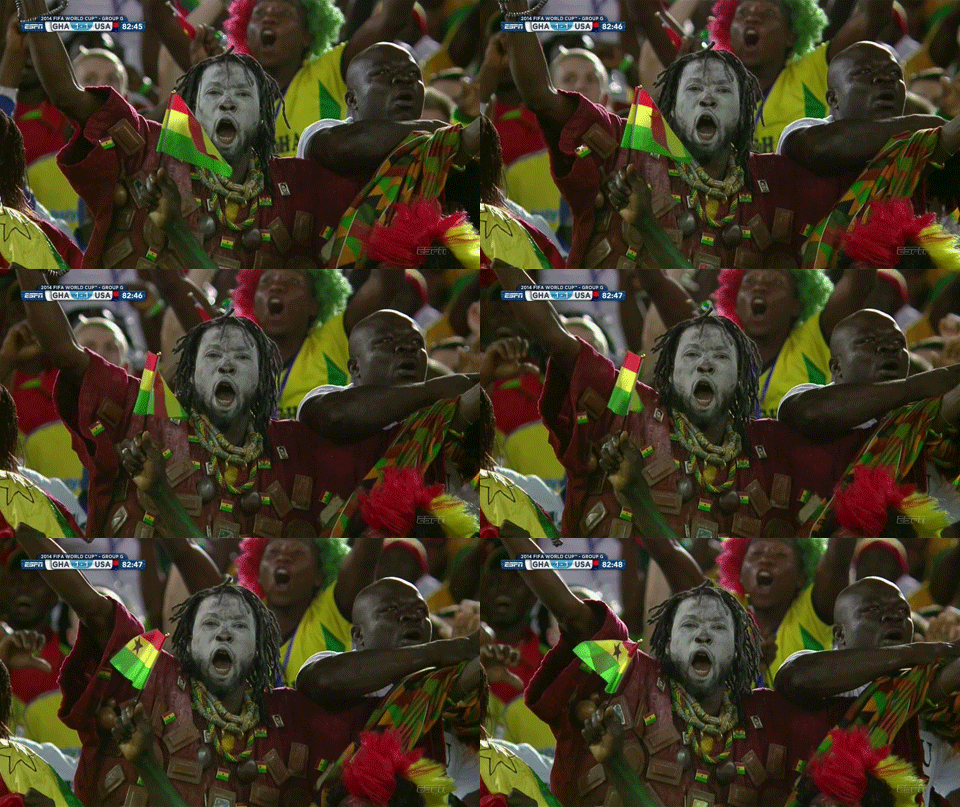
    
 
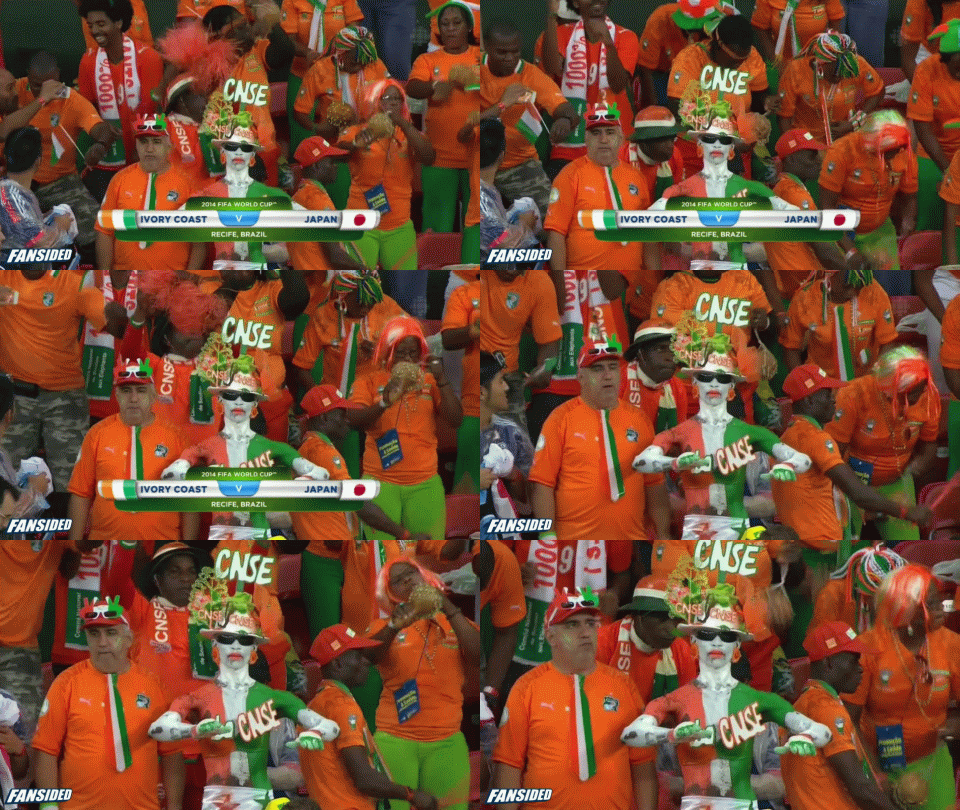
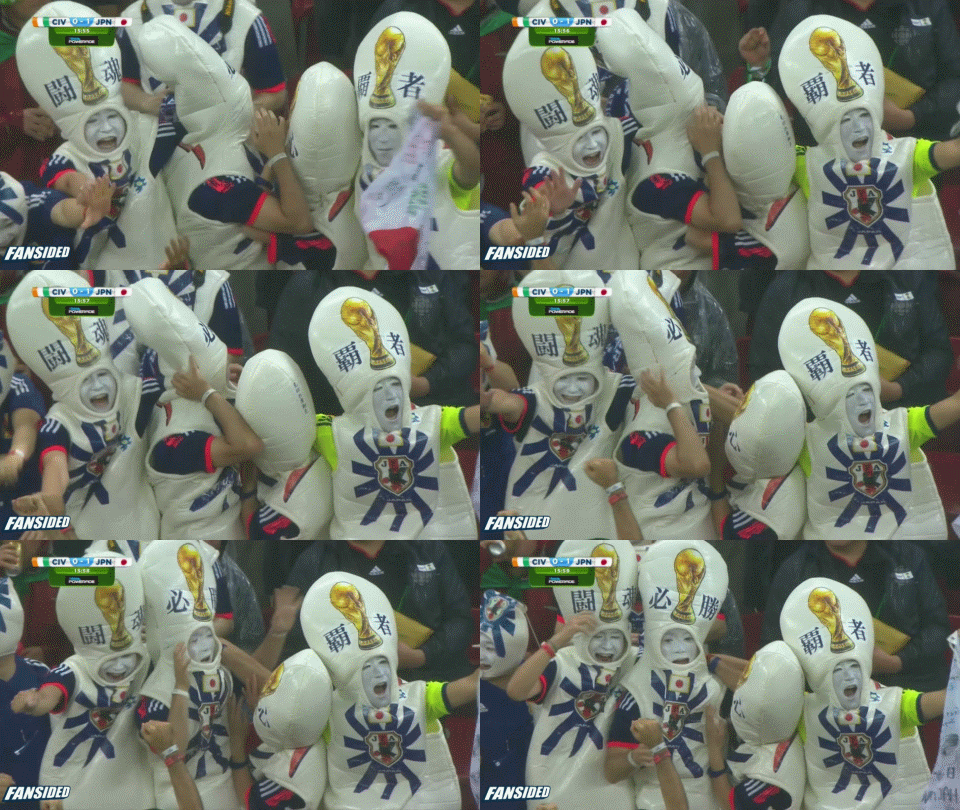
     The World Cup is a fun place for fans to be and show off their culture in unique and colorful ways the following gifs show just how interesting the crowd can be.


      Now the World Cup isn't perfect. And the biggest example of why its not is the situation with the 2022 World Cup in Qatar. The moment Qatar was awarded it everyone new something fishy was going on. In recent weeks FIFA officials have been caught taking bribes from Qatari people. In a Fancred(http://fancred.com/#) post I made several days ago I had this to say, "I could care less about the bribes and all the under the table deals that happened with Qatar, I can deal with that. But when they have all this money that they spilled all over FIFA officials for the World Cup, and not put any of that money to giving workers who are not from their country who are getting paid the bare minimum to build something that will never ever be used, without the right equipment, without proper living conditions, and complete disregard for human rights..." The death toll for the Qatar World Cup is ridiculous and that alone should be enough to strip it from Qatar.
     In conclusion the World Cup is good. It connects you to culture in a unique way that is inclusive and friendly. It is more than just a game, but it is about the people. Nations live and breathe the game, and the World Cup is the unifying gel that connects bitter rivals, and good friends together for the love of the game. You don't get this type of stuff in the political sphere because its exclusive, you don't get this in the business sphere because its exclusive, but the World Cup is for everyone and that's why it is so loved by the world. Even with its faults it unites people for a common cause, like stopping the inhumane acts that Qatar are committing. There's a reason people call it the "Beautiful Game" and that's why the World Cup is special on the field and off the field. It connects the world together for the love of the game, and for the love of their nation. Its a place people can show their patriotism to their country and share their culture in a small dose to the world.
 
 
Cited Sources:
"World War Truce: Britain vs. Germany Christmas Football Match | Fox Sports Rise As One Series." YouTube. YouTube, 24 June 2014. Web. 8 June 2015.


"After The Plane Crash, Zambia Football Plays On | Fox Sports Rise As One Series." YouTube. YouTube, 21 June 2014. Web. 8 June 2015.


"Breaking Barriers: USA vs. Iran, 1998 World Cup | Fox Sports Rise As One Series." YouTube. YouTube. Web. 22 May 2015.


"Chile Team World Cup 2014 - Miners Propaganda (English)." YouTube. YouTube. Web. 22 May 2015.


Zirin, Dave. Brazil's Dance with the Devil: The World Cup, the Olympics, and the Fight for Democracy. Chicago: Haymarket, 2014. Print.


Knijnik, Jorge, and Ramon Spaaij. "Cultural and Political Legacies of the World Cup: Where to Now?" The Conversation. Web. 8 May 2015. .

Molina, Edwin. "World Cup 2014: World Cup Tournament Brings Together People of All Cultures [Watch]." Latin Post RSS. Latin Post, 14 July 2014. Web. 8 May 2015. .



Monday, February 23, 2015

Why Sports and Being a Sports Fan is Important


Why Sports and being a Sports Fan is Important
 Sports have been around for a long time, but in the last 150 years it has become more than just a game. Its become peoples job, and has become peoples love. There are now events like the Olympics, and FIFA World Cup that have brought people together in peace and hope. Sports are a get away for some, others it's merely part of their life. But on game day inside a stadium, a bar, or with your friends there is no other feeling like it. But sports have also brought out the worst in people. Racism, classism, and religious prejudice have scarred cities, countries, and people. But even in these dark situations people come out to make a change. In this blog I’ll be talking about why sports are important and why there are many benefits about being a sports fan. In this blog I'll be focusing on soccer because of its worldwide popularity. It gives me a wider range of religion, politics, and so on.

Being a Sports Fan and the Health Benefits

    Sports are a great way to stay in shape, but being a sports fan also has benefits. In a Huffington Post article, By Anna Almendrala she talks about its psychological, and social impact on peoples lives. She has four points in it and these are it.It gives people a built in community, which gives them a sense of well being. Much like the Olympics and World Cup it gives people a common language. People know the rules the same even if you speak another language. Sports allow you to feel success. You follow a team for a long time and when they win a championship you feel all good inside. Sports have also become an outlet for people's emotions to be shown without judgement and be considered acceptable. Especially with men.
Some emotions shown by sports fans:
Joy
 
Excitement
http://i2.wp.com/www.thecollegeu.com/wp-content/uploads/2013/11/nets-fan-reaction.gif
Sad
http://i0.wp.com/www.thecollegeu.com/wp-content/uploads/2013/11/CRYING-WOLVES-FAN-KOALA-HAT.gif
Confusion
http://img.pandawhale.com/post-51329-Jacksonville-Jaguars-wtf-guy-g-Lltc.gif
Community
http://assets.sbnation.com/assets/2517147/bullsinsano.gif

Sports and Politics

    In the 1998 FIFA World Cup the USA and Iran were drawn into the same group. At this time the two countries had much tension and the game between them was being heavily covered and people thought something bad would happen. But before the first kick the Iran coaches and players brought out white flowers to give to the Americans. That moment would for that short time bring the Iran and American people together and is one of many moments when people saw the good in others.

    Sports and the its Negative Impact  

 Sports aren’t always positive in many places sports can take on the image of its people and become a violent place for racism, classism, and religious disputes. Which can lead to people getting hurt. More often than not these come out in rivalries. One rivalry sticks out above all others. The Old Firm rivalry between Celtics and Rangers, in Glasgow, Scotland. These two rivals have storied histories, always competing for championships, and the city of Glasgow. But what sets this rivalry apart is the off field issues. Celtics represented the Catholic population, and Rangers the Protestants. It has also recently represented the two political parties. There have been many violent feuds between the fans before, during, and after games. It was advised that you didn’t wear green and white hoops in Protestant areas and red and blue in catholic areas. This was bloods vs Crips but on a more civil level. One such occasion has forever changed the off field behavior of the two fans, and religions. In this news article by Bill Murray he explains what happens. “ In Glasgow, violence and abuse have gone well beyond football hooliganism. No longer can people view the conflict solely as football fans rioting after an exciting victory or a heartbreaking defeat. Cara Henderson realized this at age 15 when her boyfriend was murdered for supporting the wrong team. On October 7, 1995, Mark Scott was murdered by sectarianism.

On the day that he would die, Mark Scott's mother urged him not to wear his Celtic top in case it brought him trouble. Zipping his jacket to cover the green and white hoops, the 16-year-old schoolboy had laughed. "Don't worry, Mum," he said. "They don't do that kind of thing any more." But they did, and hours later Mark had his throat cut by a man who picked him at random from a group of Celtic supporters as they walked home from a match through a Protestant area of Glasgow. His jacket was still zipped (A Game of Two Halves).

The Mark Scott tragedy is one of many that have plagued the rivalry between Celtic and Rangers in the recent years. Like Scott, people were not aware of the level of seriousness that which sectarianism had reached. It took a personal tragedy and the love for a lost friend to prompt action. Cara Henderson was so motivated by the killing that she launched "Nil By Mouth", a campaign to put an end to sectarianism in Scotland. In 1999, four years after her friend’s murder, Henderson took it into her own hands to increase awareness and stop the violence on the streets of Glasgow and throughout all of Scotland. Recognizing that the problem existed in the way that people thought, Henderson devised a program to improve education and increase awareness of sectarianism. Addressing the murder of her friend, Henderson thought that, "when that Rangers fan stepped out from the pub doorway and looked into the crowd of Celtic fans he didn't see Mark the schoolboy, Mark the brot! her, the son, the friend...he saw Mark the Fenian, Mark the tim..." (Sanders, Old Firm Supporters). With the help of others, Henderson launched her anti-sectarianism campaign with the following objectives:
  • To inform the general public about, and promote through education and awareness of, the problems of sectarianism and bigotry within Scottish society
  • To promote the integration within Scottish society and the celebration of cultural diversity
  • To encourage people to respect all cultures and to resist sectarianism, racism and bigotry in any shape or form
  • To encourage everyone to take responsibility for their own attitudes and language, recognizing that this will help to change our society
  • To raise awareness of the damage, violence and death in our society resulting from sectarian behavior (Sanders, Campaigns).”
Despite this sad and tragic event it has done tons to smooth over the tension between the two sides, but it still is a big issue in Glasgow.

Sports and the Hope for Change


    Not all rivalries have sad stories of conflict, some like the El Clasico in Spain, between Real Madrid and Barcelona. In the the 1930’s and 40’s these two would become the images of the Dictator and the rich, and the rebels and the poor. Real Madrid was Francisco Franco the dictator of Spain’s favorite team. His political opponent a Democratic leader and president of rival Barcelona Josep Sunyol was executed without trial. Barcelona would become the symbol of hope in the reign of Franco. The club represented the peoples freedom and when they finally got it it was glorious. The rivalry is still to this day the same, Real Madrid is a major draw for rich people and Barcelona for the middle class and below.

Sports Rivalries around the World and What they Mean

  Rivalries now a days have other meanings. Some cities are split between teams, like New York, London, Milan, Rome, and Los Angeles. Others are for entire regions like Cascadia, or the Ruhr. In the Ruhr, Schalke and Dortmund two of the loudest and proudest fans in Germany, and the World play for the region, both cities have become much like how Detroit and Cleveland have become This rivalry is a bright spot for both cities and gives them pride. In the Pacific Northwest, the Seattle Sounders, Portland Timbers, and Vancouver Whitecaps play for the Cascadia Cup and domination of the Great Pacific Northwest. In Cities like Milan where AC Milan and Inter Milan, The Jets and Giants play for ownership of the city.These are what the people in these places live for. They love the competition, they love the atmosphere, and they love the game. But the game wouldn’t happen if the fans didn’t come.
Sports and their representation of its people
   The World Cup and Olympics show the world how certain countries are. Sticking with soccer for instance, teams like Brazil, Argentina, and Colombia are very flashy in the way they play. Its fast pace and fancy. Much like the people who live there. Where as current World Cup champs Germany, are more systematic, and controlled. They are often called the "Machine" referencing the way they play. The country is very much like this, and its why its the most financially stable nation in the world right now.    


Asking People on Fancred why Sports are Important

http://battingleadoff.com/wp-content/uploads/2014/06/fancred-logo-red-on-white.png

    I decided that to get a bit more personal and more in depth I’d ask people on Fancred why they think sports are important? (Currently still getting information, Hope to have it as soon as possible)
Conclusion
Sports are more than just a game. Its something people can go to get away from reality. But sometimes that reality can be brought to the game. In a chaotic world sports have always been there to bring people together. It is a language and culture of its own. It has its good and bad, but so does everything else in the world. Sports are a place emotions are accepted, being bright and colorful is fun, and being loud is normal. Sports are more than just entertainment, it's is a culture, and lifestyle. Sports are important.

https://oktoberfestforteens.files.wordpress.com/2014/07/jubel_01_60868_p880722.jpg


Citations: 

(Sports and the its Negative Impact)
"A Game of Two Halves." The Guardian.
http://football.guardian.co.uk/News_Story/0,1563,491160,00.html
Murray, Bill. The Old Firm: Sectarianism, Sport and Society in Scotland. John DonaldPublishers, Edinburgh, 1984."Renaissance and Reformation." 

 (Sports and the Hope for Change)
  "Castilian Oppression v Catalan Nationalism – “El Gran Classico”." FootballBlog.co.uk. 2 Sept. 2009. Web. 4 Mar. 2015. <http://footballblog.co.uk/castilian-oppression-v-catalan-nationalism-el-gran-classico.html>.
  
(Being a Sports Fan and the Health Benefits)
Almendrala, Anna. "How Being A Sports Fan Makes You Happier And Healthier." The Huffington Post. TheHuffingtonPost.com, 30 Jan. 2015. Web. 4 Mar. 2015. <http://www.huffingtonpost.com/2015/01/30/sports-fan-mental-health-benefits_n_6565314.html>.